Injury Rehabilitation
Dan holds specialist rehabilitation training and has worked with clients through lower back pain, post-surgery recovery and long-standing overuse conditions. The approach is methodical, patient and built around what your body can actually do right now.
The Approach
The default response to injury is rest. Sometimes that is right. But in many cases the right kind of movement is exactly what the body needs: carefully loaded, methodically progressed and tailored to what your specific injury can and cannot tolerate at each stage.
Dan works with injuries rather than around them. That means understanding the tissue, the stage of recovery and what loads are appropriate before writing a single session. Not guessing, not rushing. A programme that makes sense for your body right now.
He has worked with clients through lower back problems, post-surgery rehab, long-standing tendon conditions, hip and knee pain, shoulder injuries and hamstring tears. Most come having been told simply to rest. Most find that was the wrong advice.
Dan's Qualifications
What Dan Works With
Not an exhaustive list. If yours is not here, get in touch and Dan will let you know whether it is something he can help with.
One of the most common reasons people stop training. Dan builds programmes around loading patterns that reduce pain and rebuild supporting strength over time.
Whether it is a knee replacement, hip surgery or ligament repair, the transition from physio back to full training needs careful management. Dan bridges that gap.
From osteoarthritis to IT band syndrome, Dan builds strength around the joint and addresses movement patterns that contribute to the problem.
Graded loading is the evidence-based approach to hamstring rehabilitation. Dan programmes the progressive tensile stress the tissue needs to rebuild properly and durably.
Shoulder injuries often have movement pattern contributions. Dan assesses the whole picture and builds capacity back in a controlled, systematic way.
Tendinopathies respond well to isometric and progressive loading. Dan programmes this correctly rather than defaulting to rest, which tends to make tendon conditions worse.
How It Works
Every programme starts with a proper assessment. What follows is built specifically around your injury, your history and where you want to get back to.
Dan takes a full history of the injury, current pain levels, movement limitations and any existing medical guidance. Nothing is assumed. This shapes everything that follows.
A tailored programme built around what your body can tolerate right now, with clear progression built in. No generic protocol. No exercises that aggravate the issue.
Loading increases in a structured way, giving the tissue what it needs to adapt and rebuild without setbacks from doing too much too soon.
The goal is not pain management. It is getting you back to training at full capacity, with the strength and movement quality to stay there.
Client Story
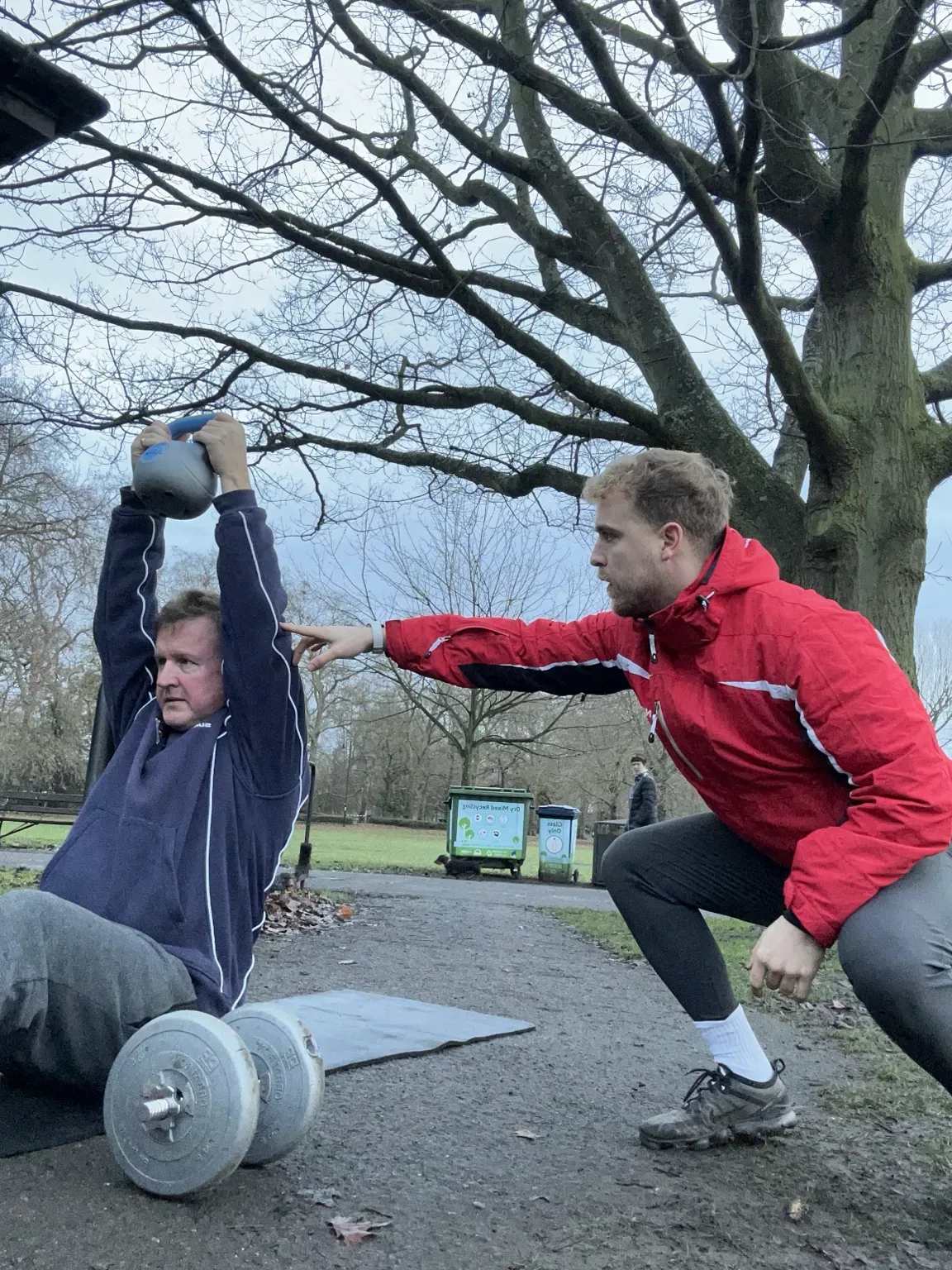
"I came to Dan as a 67 year old in remission from a debilitating cancer that has affected the nerves in my legs and consequently my strength, stamina and balance. After a careful examination, Dan put together a programme that we follow twice a week in the park. Highly recommend Dan as someone who knows his stuff and will work you at the right pace for you."
Edward Speed, Google Review
At The Park PT, Dan has worked with clients through lower back problems, post-surgery recovery, hip and knee issues and long-standing tendon conditions. Most come having been told to rest. Most find that structured loading was what they actually needed.
Book a Free CallYes. Training with an injury is often exactly the right thing to do, provided the programming is appropriate for where you are in your recovery. Dan assesses your injury and current capacity before designing anything. Nothing is assumed or guessed at.
Not in most cases. If you have an existing diagnosis or have been working with a physio, Dan will work alongside that. For more complex conditions or recent surgery he may recommend getting clearance first, but for the majority of injuries this is not required.
That depends entirely on the surgery and where you are in your recovery. Dan will want to understand the procedure, your current mobility and any restrictions your surgeon or physio has given you. In many cases training can begin earlier than people expect, with appropriate loading and careful monitoring.
Every injury is different, but most clients notice meaningful improvements in strength, movement quality and pain levels within six to eight weeks of consistent training. The pace depends on the nature of the injury, recovery history and how the body responds to progressive loading.
Physiotherapy typically focuses on the early stages of recovery, reducing pain and restoring basic function. Rehab personal training picks up where that leaves off, rebuilding strength, movement patterns and full capacity through progressive exercise. The two work well together and Dan is happy to coordinate with an existing physio.
A free, no-obligation call to discuss where you are and whether Dan can help.
Book a Free Call